
What is EMDR?
EMDR (Eye Movement Desensitisation and Reprocessing) is a form of psychotherapy that enables people to heal from the symptoms and emotional distress that are the result of disturbing life experiences. Much as the body can heal itself, EMDR supports the mind to do the same. EMDR focuses on processing disturbing memories, sensations, and beliefs so that they affect you less.
How do our brains process disturbing life experiences?
Most of the time, you routinely manage new information and experiences without you being aware of it. However, when something out of the ordinary occurs and you are overwhelmed by an event (e.g. a car accident) or by being subjected to distressing situations, your natural coping mechanism can become overloaded.
This overloading can result in your memory of the experience remaining frozen and “unprocessed”. Such unprocessed memories and feelings are stored in the limbic system of your brain in a “raw” and emotional form, rather than in a verbal “story” mode. The limbic system maintains memories and beliefs in an isolated memory network that is associated with emotions and physical sensations, which are disconnected from the brain’s cortex where we use language to store memories.
The limbic system’s traumatic memories can be continually triggered when you experience events similar to the difficult experiences you have been through. Sometimes the memory itself is long forgotten, but the painful feelings such as anxiety, panic, anger, or despair are continually triggered in the present. EMDR helps to create the connections between your brain’s memory networks, enabling your brain to process the disturbing life experience in a very natural way.
What EMDR can help with:
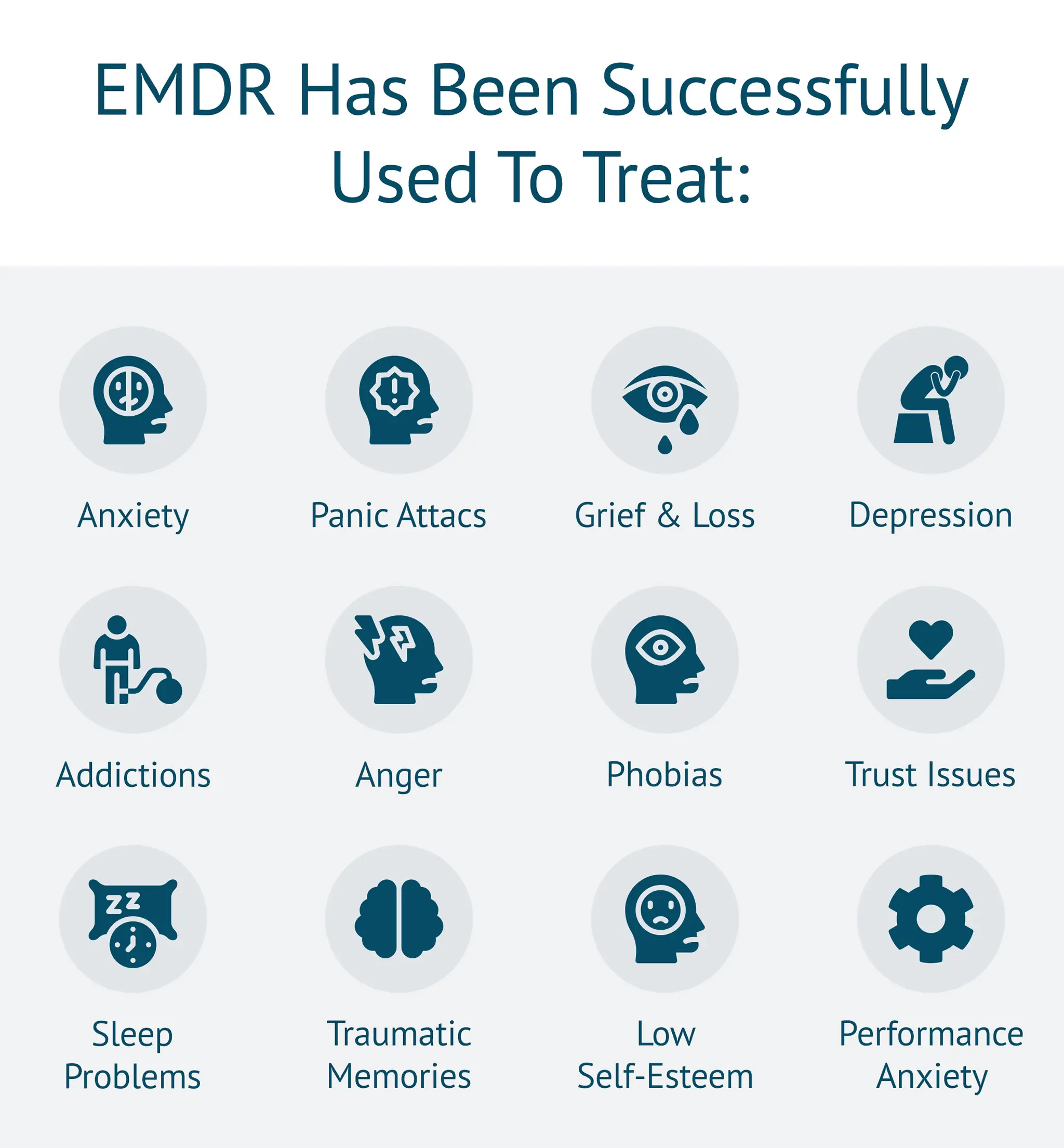
EMDR was originally developed for trauma and Post Traumatic Stress Disorder, however research is continuing to support its application to a range of other psychological issues, including:
- Anxiety
- Chronic pain
- Complicated grief
- Depression
- Eating disorders
- Panic Attacks
- Personality disorders
- Phobias
How does EMDR work?
EMDR works by having a patient recall disturbing life experiences while the therapist provides bilateral stimulation to help the brain reprocess and store these memories in a healthier way, which in turn reduces the associated negative emotions and symptoms. During each session, eye movements like those during REM sleep, will be recreated by having you watch a dot of light move backwards and forwards across your visual field. Sometimes, self-tapping or audio in headphones can be used instead. The eye movements will last for a short while and then stop.
You will then be asked to report back on the experiences you have had during each of these sets of eye movements. Experiences during a session may include changes in thoughts, images, and feelings. We will collaborate around which challenging life experience is the appropriate starting point in each session. This therapy is provided through a specialised online platform which provides digital tools to engage bilateral stimulation, with the support and guidance of the therapist.
For more information about EMDR, please see www.emdr.com, www.getselfhelp.co.uk or www.thetraumacentre.com
