
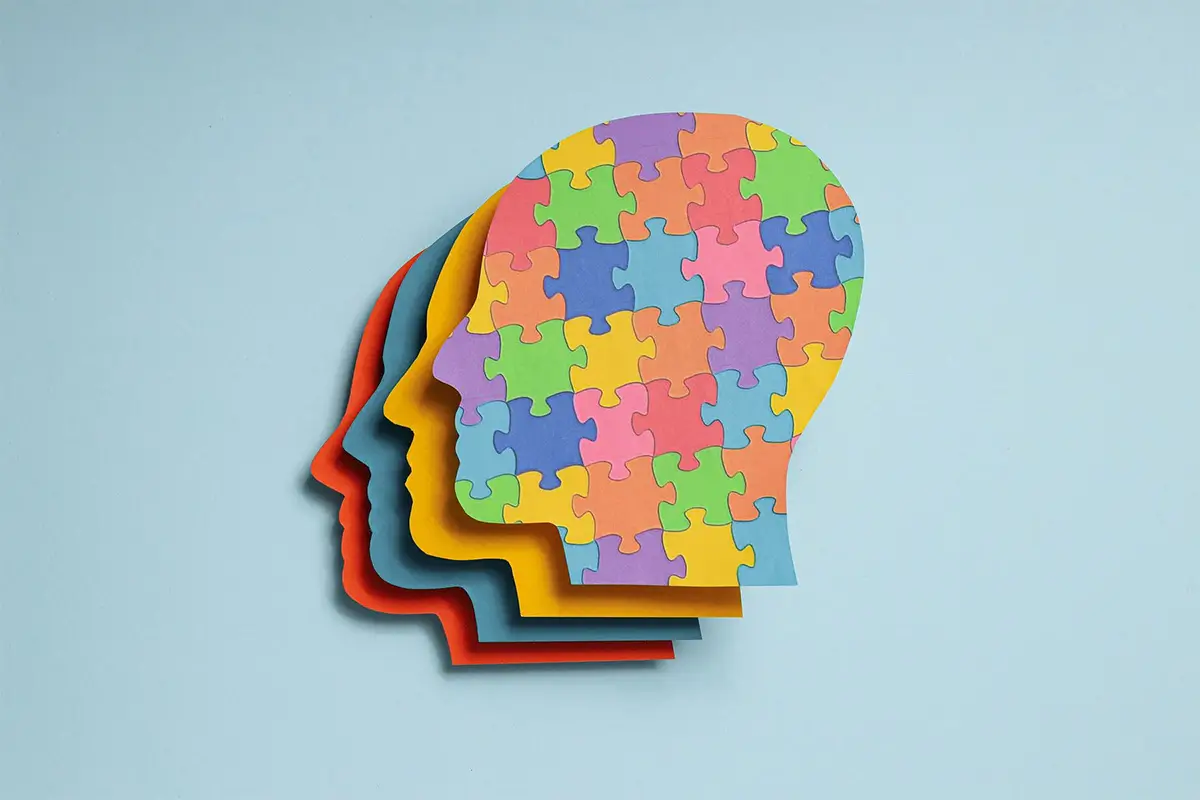
Neurodiversity vs. Neurodivergence
“Neurodiversity” is a term that describes the natural variation in the way human brains are structured and develop, which leads individuals to experience the world differently and to respond differently to external stimulation. The concept is grounded in the assumption that this neurological variation is a normal feature of our species and as natural as variation in other characteristics such as height, eye color, or physical strength.
Neurological variation can manifest in factors such as sensitivity to external stimulation, thinking patterns, information processing, emotional processing, and other psychological characteristics.
The origin of the term “neurodiversity” is sometimes attributed to sociologist Judy Singer, who used it in her 1998 honors thesis at the University of Technology Sydney.
“Neurodivergent” refers to individuals whose neurological characteristics deviate sufficiently from established norms that they may qualify for a clinical diagnosis such as ADHD, Autism Spectrum Disorder, Dyslexia, or similar conditions.
Most Common Diagnoses Considered Neurodivergent
The following are the most commonly recognized conditions under the neurodivergent umbrella:
- Autism Spectrum Disorder (ASD), including Asperger’s syndrome
- Attention-Deficit/Hyperactivity Disorder (ADHD)
- Dyscalculia — affects understanding numbers and mathematical concepts
- Dysgraphia — affects the physical act of writing
- Dyslexia — affects reading and processing written language
- Dyspraxia — affects motor coordination and planning
- Synesthesia — the experience of one sensory stimulus triggering an additional, involuntary sensation (e.g. associating colors with sounds, or perceiving sounds as visual shapes)
- Sensory Processing Disorder — heightened or reduced sensitivity to sensory input
- Tourette’s syndrome
Are These Diagnoses the Same as Mental Disorders?
The diagnoses listed above are not equivalent to mental disorders. As noted above, the ways in which brains are built and function vary naturally and substantially between individuals, and deviation from an established norm does not in itself indicate that something is wrong.
Many neurodivergent individuals develop effective and productive strategies to manage the aspects of their cognition that create difficulty. They may structure their environments to suit their needs, build on their distinctive strengths, and leverage the qualities that set them apart. Many artists, scientists, entrepreneurs, and inventors are likely neurodivergent or possess neurodivergent traits, and have used those traits to produce remarkable creative, scientific, or business contributions, whether or not they have ever received or sought a diagnosis.
Not all neurodivergent people pursue a formal diagnosis. For some, a diagnosis is never necessary or desired. For others, it can be genuinely valuable: it can deepen self-understanding, help communicate one’s needs and behaviors to others, and open access to appropriate support.
It is also important to note that neurodivergent traits exist on a spectrum of intensity. Those who do receive a diagnosis are typically those whose difficulties are pronounced enough that they seek support from health or social services. Such support may take the form of medication, psychotherapy, workplace or educational accommodations, or family-level interventions such as couples or family counselling.
Therapy and Coaching for Neurodivergent People
Not every neurodivergent person requires therapy. However, research indicates that neurodivergent individuals may face a higher risk of developing mental health difficulties including depression, anxiety disorders, eating disorders, addiction, and OCD, when compared to the general population (Capp et al., 2025; Christiansen et. al., 2025; Lai et al., 2019). Where such conditions are present, professional treatment from a psychologist or psychiatrist is appropriate, as they can significantly impact wellbeing and quality of life.
Beyond clinical presentations, some neurodivergent individuals struggle with the challenges and stressors of everyday life: difficulties in social interactions, recurring interpersonal conflicts, challenges navigating workplace or personal environments, or simply finding a sense of direction. Therapy and coaching can support people in learning to manage these stressors, better understand their own needs, and develop workable strategies for difficult situations.
Topics Neurodivergent People Commonly Struggle With
- Low self-esteem
- Anxiety
- Depression
- Stress
- Interpersonal conflicts including difficulties in relationships, friendships, or at school and work
- Social situations and communication
- Eating disorders
- Substance misuse
- Trauma and PTSD
- Organization and executive functioning at work
Therapy
Therapy is typically a longer-term process in which the client, guided by the therapist, works to understand the behavioral, cognitive, relational, or environmental patterns that contribute to their distress, and to shift these towards more constructive ones. This does not have to be centered on a specific mental disorder. Therapy broadly aims to reduce suffering and create meaningful, lasting change.
Examples of Topics That May Be Addressed
- Exploring childhood and other formative experiences, understanding how these may influence current difficulties, and working to change unhelpful patterns
- Identifying the individual causes of depression, anxiety, or eating disorders, and developing the tools to manage them
- Recognizing negative communication patterns and developing more effective alternatives
- Developing self-understanding: clarifying one’s needs, emotions, and values, and building a picture of what a fulfilling life looks like
Coaching
Where therapy aims at deeper change and typically involves detailed exploration of historical patterns and acquired behaviors, coaching tends to be shorter in duration and more specific in scope. It is oriented towards concrete goals: developing a particular skill, changing a response pattern in a specific context, or achieving a defined objective at work or in personal life. Coaching is not used to treat mental disorders. It rather aims at improving wellbeing or reaching specific goals.
Examples of Topics That May Be Addressed
- Understanding one’s own needs and learning skills to enhance communication at work or at home
- Developing organizational skills and learning to adjust environmental factors for better day-to-day functioning
- Professional development including clarifying interests and career direction
- Personal development and growth
Different, Not Deficient
Being neurodivergent does not mean that a person is sick or somehow less normal than others. Neurodiversity reflects the natural variation in how human brains develop and function, and a diagnosis is simply a tool for understanding oneself more clearly and accessing support when needed. Whether you are seeking answers about your own experiences, navigating the challenges that can sometimes accompany neurodivergence, or looking to build on your strengths, professional guidance can help.
If you would like to explore therapy, coaching, or assessment options, we invite you to reach out to our clinic. We are here to provide a supportive, non-judgmental space where you can better understand yourself and find strategies that work for you.
References
Armstrong, T. (2010). Neurodiversity: Discovering the extraordinary gifts of autism, ADHD, dyslexia, and other brain differences. Da Capo Lifelong.
Capp, G., et al. (2025). Depression and anxiety are increased in autism and ADHD: Evidence from a young adult community-based sample. JCPP Advances. https://doi.org/10.1002/jcv2.70003
Christiansen, G.B., Petersen, L.V., Chatwin, H. et al. The role of co-occurring conditions and genetics in the associations of eating disorders with attention-deficit/hyperactivity disorder and autism spectrum disorder. Mol Psychiatry 30, 2127–2136 (2025). https://doi.org/10.1038/s41380-024-02825-w
Lai, M.-C., et al. (2019). Prevalence of co-occurring mental health diagnoses in the autism population: A systematic review and meta-analysis. The Lancet Psychiatry, 6(10), 819–829. https://doi.org/10.1016/S2215-0366(19)30289-5
Singer, J. (1999). Odd people in: The birth of community amongst people on the autism spectrum. Honours thesis, University of Technology Sydney.
